


Not everyone is okay this time of year. The pressure is intense: family, money and reviewing success or failure can be very hard. And if you’ve lost someone - even harder.
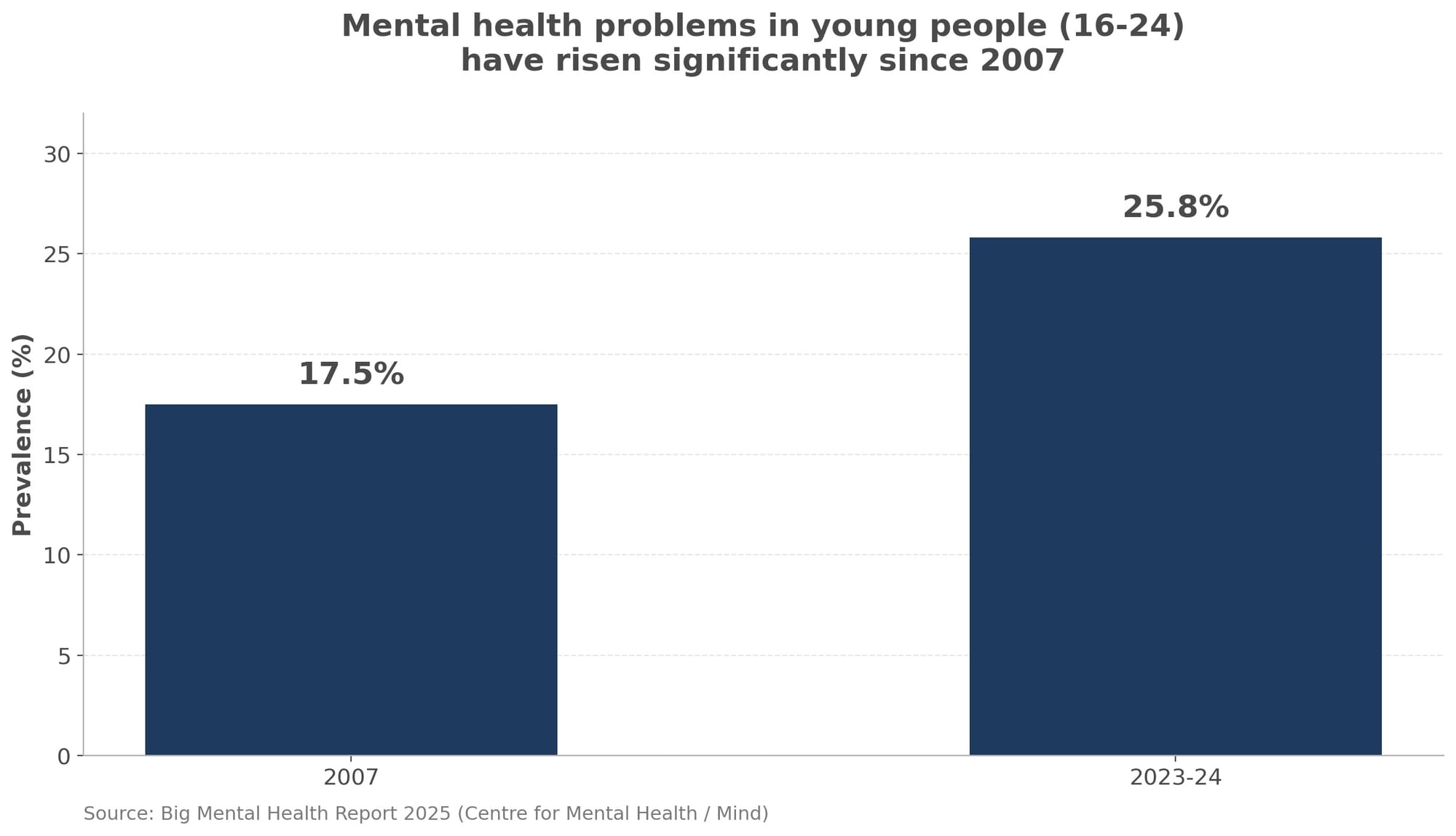
One in five adults in England now lives with a common mental health problem, according to the 2025 Big Mental Health Report. Among young people aged 16 to 24, prevalence has climbed from 17.5% in 2007 to 25.8% in 2023-24, roughly a 47% increase in a generation.
The NHS is handling record demand. Mental health services received 5.2 million referrals during 2024, up nearly 38% from 2019. Yet services are not keeping pace.
The mental health waiting list in the UK now stands at approximately 1.7 million people. Analysis by Rethink Mental Illness found people are eight times more likely to wait over 18 months for mental health treatment than for physical health treatment.
The economic toll is immense. Poor mental health costs the UK economy an estimated £300 billion annually. In 2024-25, stress, depression and anxiety accounted for 22.1 million working days lost. Mental ill health has become the leading cause of long-term workplace absence, responsible for 41% of extended sick leave.
The Winter Amplifier: Seasonal Affective Disorder
Seasonal Affective Disorder is a recognised clinical condition, not a folk diagnosis.
Common estimates suggest around 2 million people in the UK experience SAD annually, with one-in-fifteen to one-in-twenty experiencing symptoms severe enough to meet diagnostic criteria.
Reduced sunlight disrupts serotonin production, affects melatonin levels and interferes with circadian rhythms. Beyond clinical SAD, many people notice their mood dipping in darker months.
The condition typically develops between ages 20 and 30 and affects women three to four times more often than men. There's also an emerging link with ADHD: research found approximately 27% of adults with ADHD also experience SAD, making them three times more likely to report symptoms than the general population.
The Financial Backdrop
Mind's research shows nearly half of people say the cost-of-living crisis has affected their mental wellbeing, with more than one in five experiencing stress, anxiety or depression as a direct result.
People struggling financially are at significantly higher risk of depressive symptoms. Among those who find it difficult to afford rent or mortgage payments, 27% show significant depressive symptoms, compared to 15% who find payments manageable.
Many adults report difficulty affording rent, mortgage payments or energy bills. Mind's Infoline has recorded a jump in calls about money problems since summer 2021, with a further 10% increase during winter 2022-23.
The Christmas Paradox
The festive season presents its own psychological challenge. Survey after survey reveals a disconnect between Christmas as cultural ideal and Christmas as lived experience.
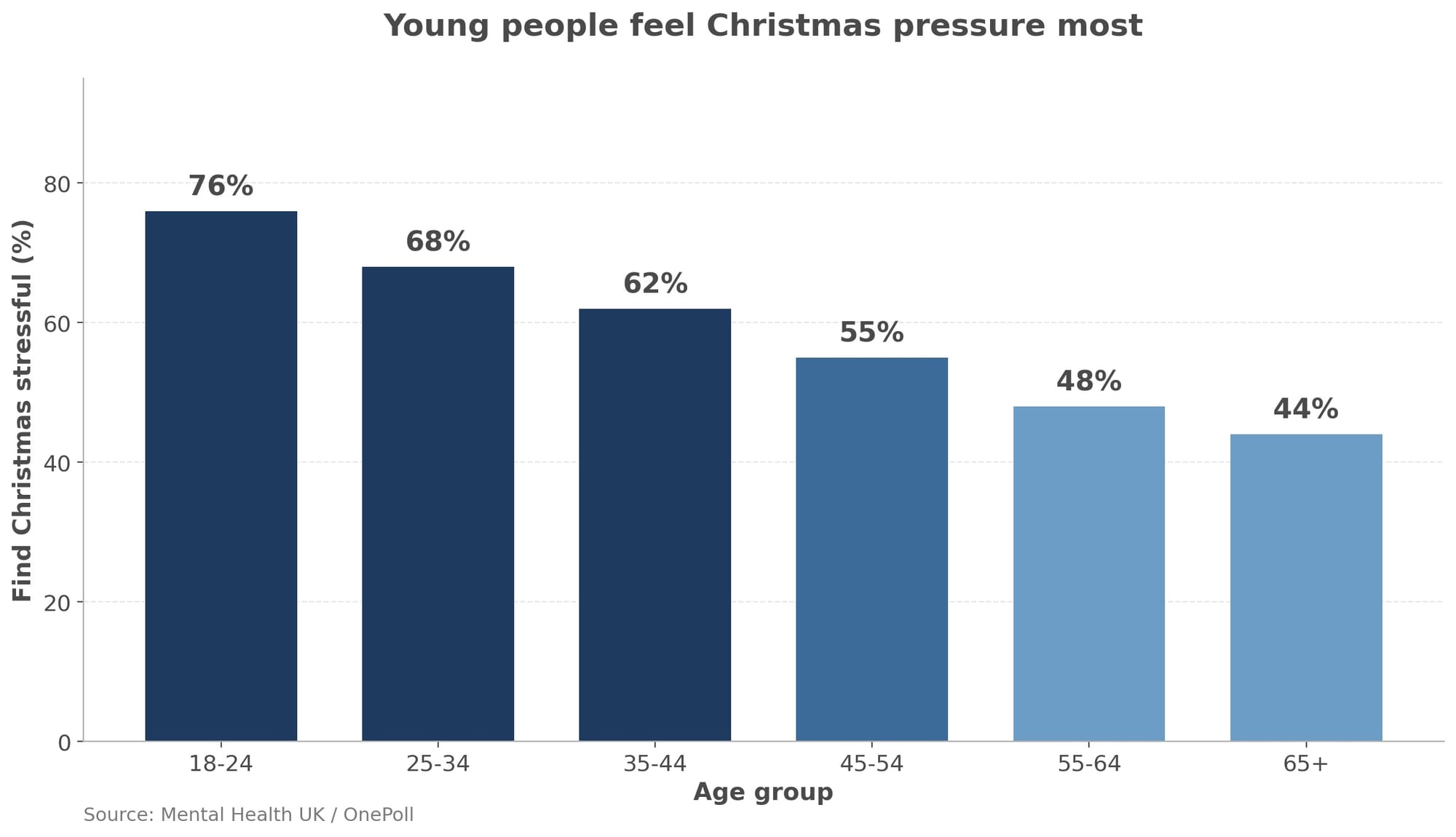
Mental Health UK research found three in ten British adults say their mental health declines over Christmas, with 76% of those aged 18 to 24 finding the period stressful. A quarter of those who find Christmas difficult feel lonelier at this time of year. Many report experiencing loneliness even when surrounded by other people.
Loneliness at Christmas hits the elderly hardest - Age UK found 1 million older people say they are more isolated at Christmas than any other time of year - but an estimated 2.7 million people across all ages spend Christmas Day completely alone.
The Suicide Myth
Multiple studies consistently show suicide rates are often lower around Christmas, with peaks occurring in January or spring. Provisional government data on suspected suicides in England found December had one of the lowest rates in the reporting period, while January showed higher rates.
This matters because the myth can be harmful, creating self-fulfilling anxieties and distracting from times of genuine risk. The period immediately following Christmas, when routines resume and social scaffolding disappears, may be more dangerous than December itself.
The overall picture remains concerning regardless of seasonality. In 2023, there were 6,069 suicides registered in England and Wales, the highest rate since 1999.
Suicide remains the biggest killer of men under 50 in the UK. More on this in the new year.
What Leaders Can Do
Ask the Question
Three in ten people won't volunteer that they're struggling. Give line managers permission and basic training to ask.
Front-Load Q1
Build in lighter workloads and later starts when SAD peaks. People returning from Christmas may be depleted, not refreshed.
Know the Vulnerabilities
SAD affects up to 2 million people. Those with ADHD are three times more likely to experience it.
Make the Case
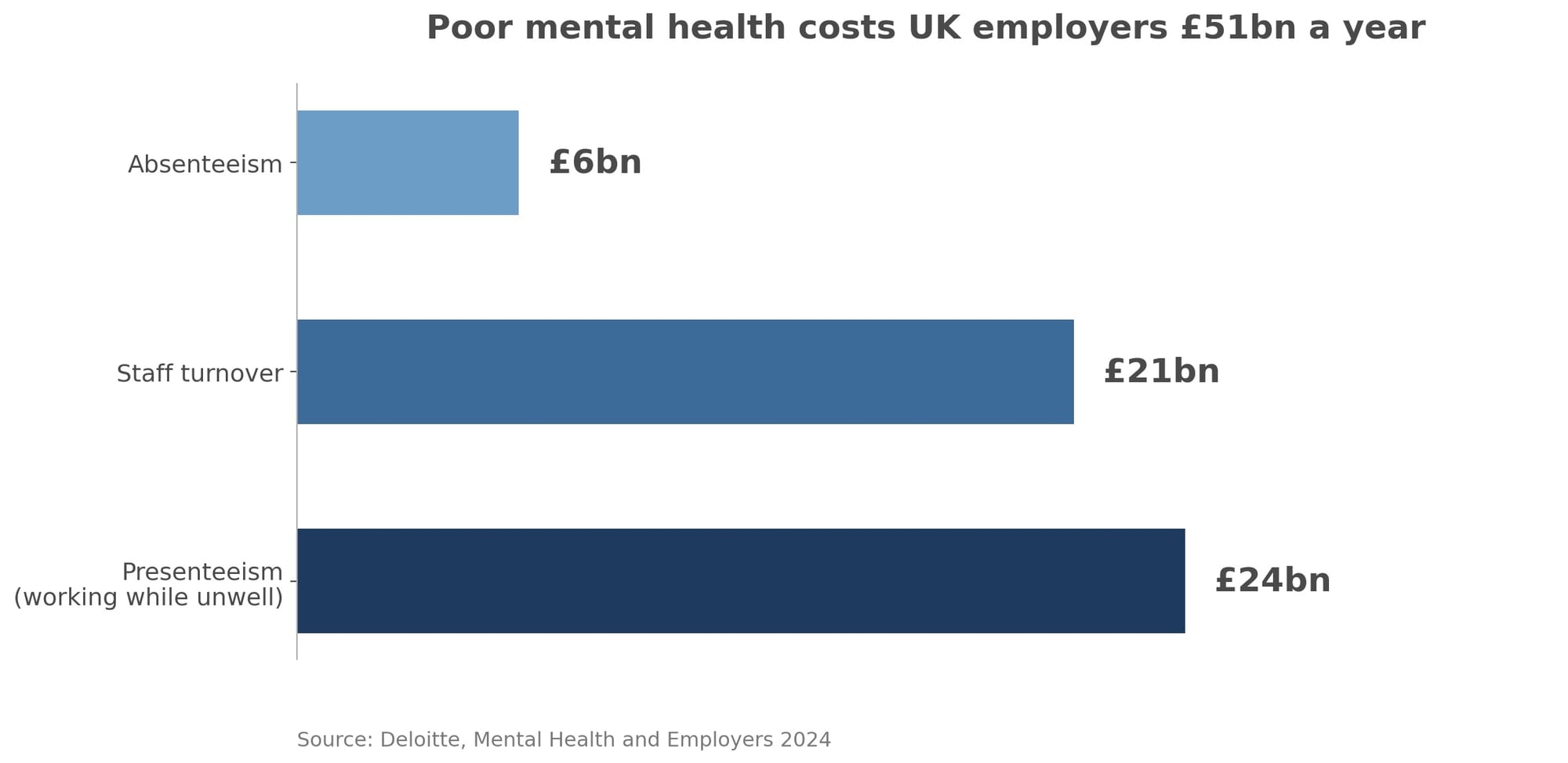
Deloitte estimates a return of £4.70 for every £1 invested in mental health support, rising to £6.30 for universal interventions. Point your FD to the 22 million working days lost last year and the £51 billion annual cost to employers.
Finally, if someone looks like they need a hug - give them a hug. And if you have a dog, give them a hug from me.
Position Your Brand
Most leaders struggle to be clearly understood and genuinely different. They lack the data-driven clarity to position their offering, define their category, and articulate their value. This limits the deals they can win and the growth they can achieve.
Tollejo helps CEOs create that clarity. We research, diagnose, and build positioning strategies grounded in evidence. The result: leaders who are understood, differentiated, and ready to compete for bigger opportunities.