


Would you rather have more hospital beds for people or the latest version of Windows?
Ooh, tough one.
As patients lie on trolleys in hospital corridors, teachers buy classroom supplies out of their own pockets and councils close libraries, the government is paying billions a year for software licences - many of which are unused, unaudited and unchallenged.
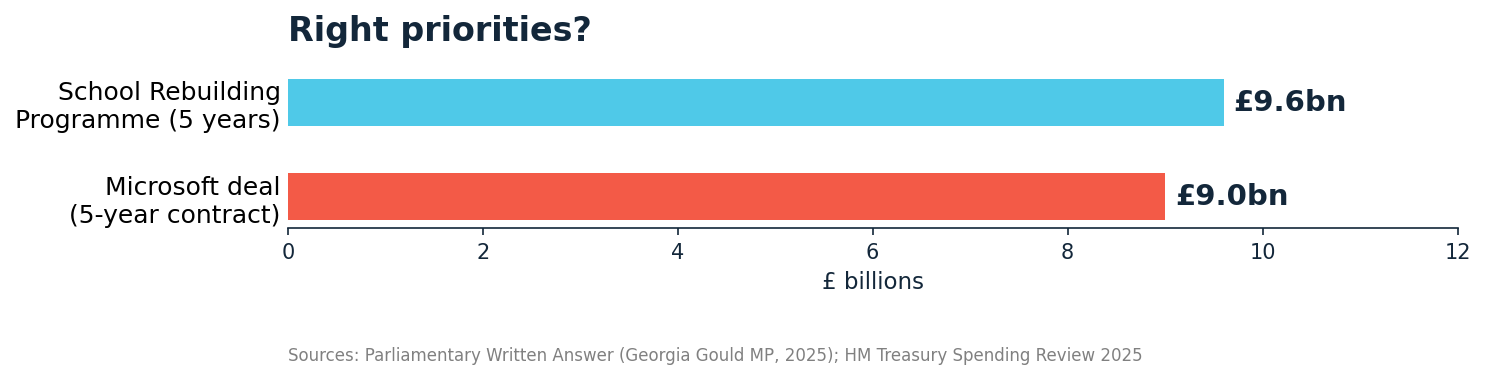
The UK government is about to spend £9 billion on Microsoft products over five years, covering everything from Office licences to cloud services for schools, hospitals, councils and fire services.
And that's just Microsoft. There are some other enormous contracts for software licences.
To put that in perspective, the government is spending £9.6 billion on new school buildings in the same period.
Nobody in Whitehall appears to have asked a very basic question before signing: do we actually need all of this?
And the answer, according to The Executive Summary - and almost every independent assessment - is 'no'.
The Social Market Foundation estimated in 2024 that restrictive licensing practices alone cost the public sector £60 million a year, adding up to more than £300 million over a single parliament.
The government's own State of Digital Government review found that over a quarter of central government digital systems are now classed as legacy, reaching 70% in some departments, and identified £45 billion in productivity gains that remain unrealised because of outdated systems.
The National Audit Office has been saying something similar for years. Its head, Gareth Davies, told Parliament that a lack of digital and procurement capability had led to wasted expenditure and stalled transformation.
The TaxPayers' Alliance called the failure to capture productivity gains "inexcusably wasteful."
And then there is the cloud market itself.
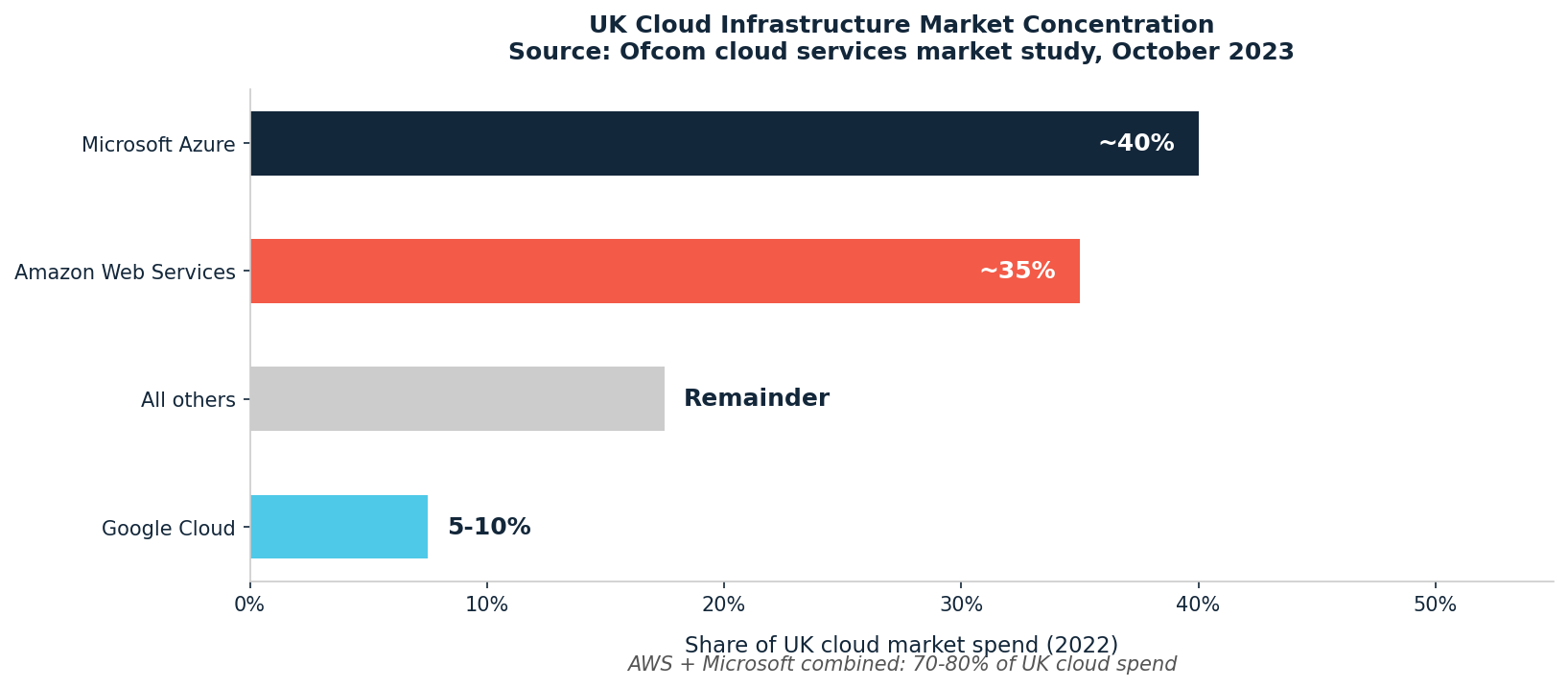
After an 18-month investigation published in 2025, the Competition and Markets Authority concluded that competition is simply not working in UK cloud computing. Two American companies control around 75% of the market.
Vendor lock-in is rampant. Switching is made deliberately difficult and expensive.
But Europe is starting to fight back - a little bit.
Other ways round
CIOs are waking up to the idea they don't have to be clubbed over the head every day by punishing Big IT contracts.
Consider third-party support. Across the public sector, departments and councils run enterprise systems built on Oracle, SAP and IBM, paying the original vendors enormous annual maintenance fees.
Those fees rise every year as the level of support declines.
Independent providers consistently deliver savings of 50% or more on annual vendor support fees, a figure borne out across hundreds of public and private sector contracts.

Sourcing technology to turn strategy into reality
Proudly sponsors the Executive Summary
Origina, founded by former IBM engineer Tomás O'Leary, focuses on IBM software and delivers savings of upwards of 50% annually. Its engineers are largely drawn from the teams that originally built the software they now support, which gives the company a depth of knowledge that IBM's own support function often cannot match.
Its European clients include BT, T-Mobile, Sainsbury's and public sector departments have cut their support bills in half. Yet the majority of government departments continue paying full price.
If only the taxpayer knew.
The trouble is software isn't as visible as something like a hospital. It's an accounting and paperwork issue hidden in the back office.
Nottinghamshire County Council was spending £100,000 a year just to keep its SAP system patched. In 2017, it switched to a third-party provider and has renewed that contract since, with its group manager Sarah Stevenson telling Computer Weekly:
"I think more people should take the plunge."
Open source
Open-source software represents another opportunity and the rest of Europe is already moving on it.
In the summer of 2025, Denmark's Ministry of Digital Affairs began replacing Microsoft Office 365 with LibreOffice, an open-source office suite that costs nothing to licence. Copenhagen and Aarhus had already announced similar transitions.
Denmark's digital minister, Caroline Stage Olsen, said:
"We must never make ourselves so dependent on so few that we can no longer act freely. Too much public digital infrastructure is currently tied up with very few foreign suppliers. This makes us vulnerable. Also financially."
Germany's Schleswig-Holstein region is migrating 30,000 government workstations from Microsoft to Linux and LibreOffice. France has installed LibreOffice on 500,000 workstations across 11 ministries.
But in the UK, nothing comparable is happening. That's a lot of taxpayer money flowing to the US.
Why isn't it changing?
Fear. Job safety. Blame avoidance. Trade politics. Bad culture.
Nobody in charge wants to be the person who moved a department off Microsoft and then had to explain a disruption to a minister.
The perceived risk of exploring alternatives, even where those alternatives are proven, well-supported and used by allied governments across Europe, outweighs the certain cost of doing nothing.
Vendors know this. They build their commercial models around it.
The other problem is skills. The government's own digital function lacks the specialist expertise to evaluate, negotiate or manage complex software procurement.
The NAO has said:
"[We] found that commercial teams have not made full use of digital expertise and have typically adopted a generalist model more suited to traditional outsourcing than to complex technology procurement."
I would be surprised if the government does not have the technical depth to challenge vendor assumptions, given it is perfectly capable of scrutiny of pretty much every hotel night booked by a Civil Servant. Mustn't buy drinks, now, but do whack another billion on the tab for Powerpoint.
And there is an uncomfortable political dimension.
US tech giants are investing billions into the UK economy (at the moment).
Microsoft, Google and Nvidia announced major commitments during President Trump's visit in 2025. The government is understandably reluctant to bite the hand that feeds - although watch this space as to whether those agreements stand.
But accepting investment and questioning procurement are not the same thing.
You can welcome American capital while still asking whether every school and hospital in the country needs to be locked into a single Big IT software subscription.
It's fingers in your ears time
The history of government IT projects, from the £12 billion NHS National Programme for IT disaster to Universal Credit's endless delays, would make anyone cautious about dramatic upheaval.
But there is a difference between caution and negligence.
The government is signing enormous, long-term deals without proper audit, evaluating alternatives or even basic visibility into how many licences are being used versus how many are being paid for.
Given how hard it is for small suppliers to even get accepted for a £20k project, shouldn't at least some level of focus be going into questioning - do we really want all these software licences?
