The British have a new hobby, which in cultural terms is right up there with conkers, bunting and Bake Off.
Scalping prime ministers has become such a national pastime, it could get its own TV show. Working titles: "Don't lose your seat", or "One in, one out".
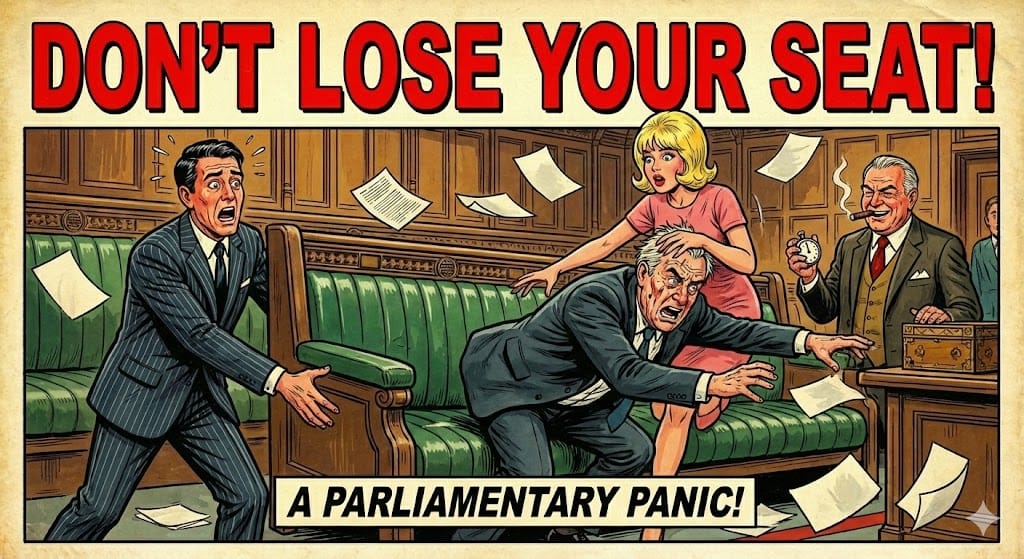
The British have always been fans of public humiliation. 24-hour news and meme-fests on TikTok are today's version of throwing rotten fruit at someone in the stocks or a public hanging.
These events would always draw a crowd, just as the quivering tip of the cane at school assembly had so many school children wondering, who would be next.
Keir Starmer is the latest contestant. He has weathered a freebies row, fuel payment backlash and a cabinet resignation over aid cuts - but nothing too testing.
The serious blows have been more recent. Angela Rayner's resignation triggered a major reshuffle, but the Epstein-linked controversy involving Peter Mandelson is by far the most damaging. Several Labour MPs have now called on Starmer to resign, including Rachael Maskell, who said his position is ‘untenable.’
The initial reaction under the reality TV mindset is to get Starmer out and watch the fireworks. But is that wise for UK growth? Do we really want another PM to fall?
It depends what he knew and when he knew it - and until that is known in full, it's wise not to reach for the pitchfork just yet.
GDP growth is forecast at 0.9 to 1.3% for the year, according to EY and the CBI, but business investment is expected to contract 0.2%.
Unemployment sits at 5.1%, which is not catastrophic by historical standards but at its highest level in four years, up from 4.4% a year ago and climbing.
But permanent hiring has now declined for over three years straight according to KPMG and the REC.
In other words, more so-called 'working people' are out of work, largely due to employers being out of pocket to hire because they are paying higher taxes to do so. Jobs have been deleted, gone offshore where those taxes do not impact - or to freelancers and fractionals.
Even those in government in charge of attracting companies to the UK are scratching their heads as to how to do so. There are no tax incentives they can use.
So imagine if it were to become harder under new leadership with even less appetite for growth or a greater propensity for confusion.
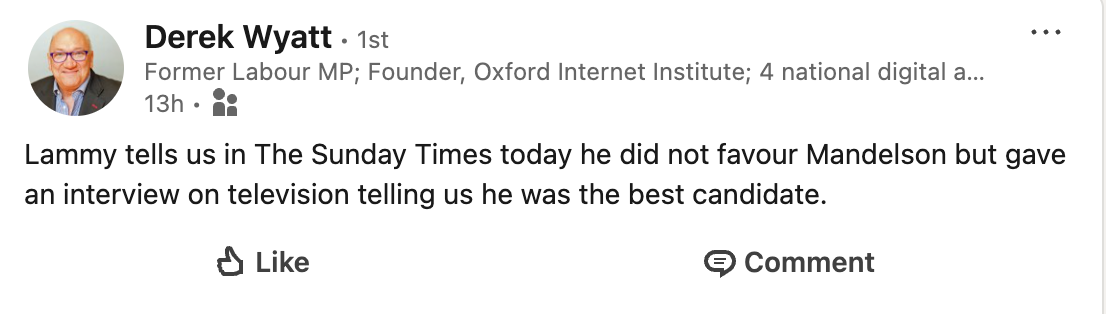
For instance, former Labour MP Derek Wyatt wrote on Linkedin:
“Lammy tells us in The Sunday Times today he did not favour Mandelson but gave an interview on television telling us he was the best candidate.”
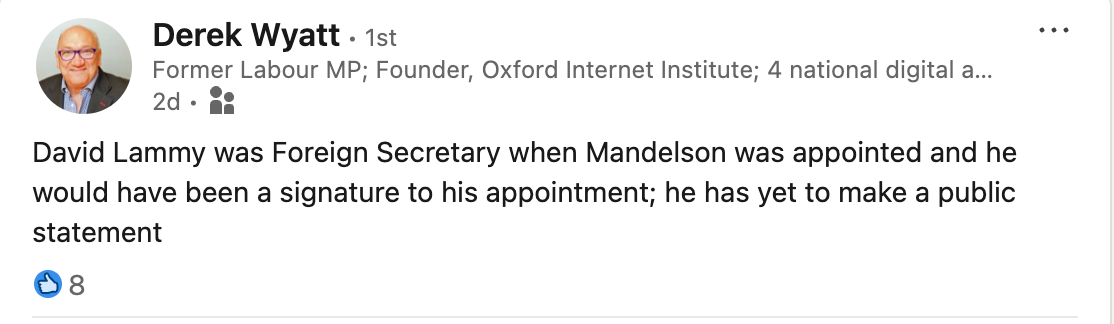
And in a separate post, Wyatt said:
“David Lammy was Foreign Secretary when Mandelson was appointed and he would have been a signature to his appointment; he has yet to make a public statement.”
It has been said this government has gone to war with business. And while many business owners and entrepreneurs have been livid with the budgets, others have accepted that doing business will be more expensive and have started to find ways to adapt.
What is harder to adapt to is the feeling that money is being wasted.
To use a British phrase, it is 'a bit annoying' when taxpayers see senior officials splashed across the media standing in their pants. It is then maddening when one of them is reported to have had a long-standing association with Jeffrey Epstein.
The question is about what was known before the appointment. There are two problems circling Sir Keir around the issue itself.
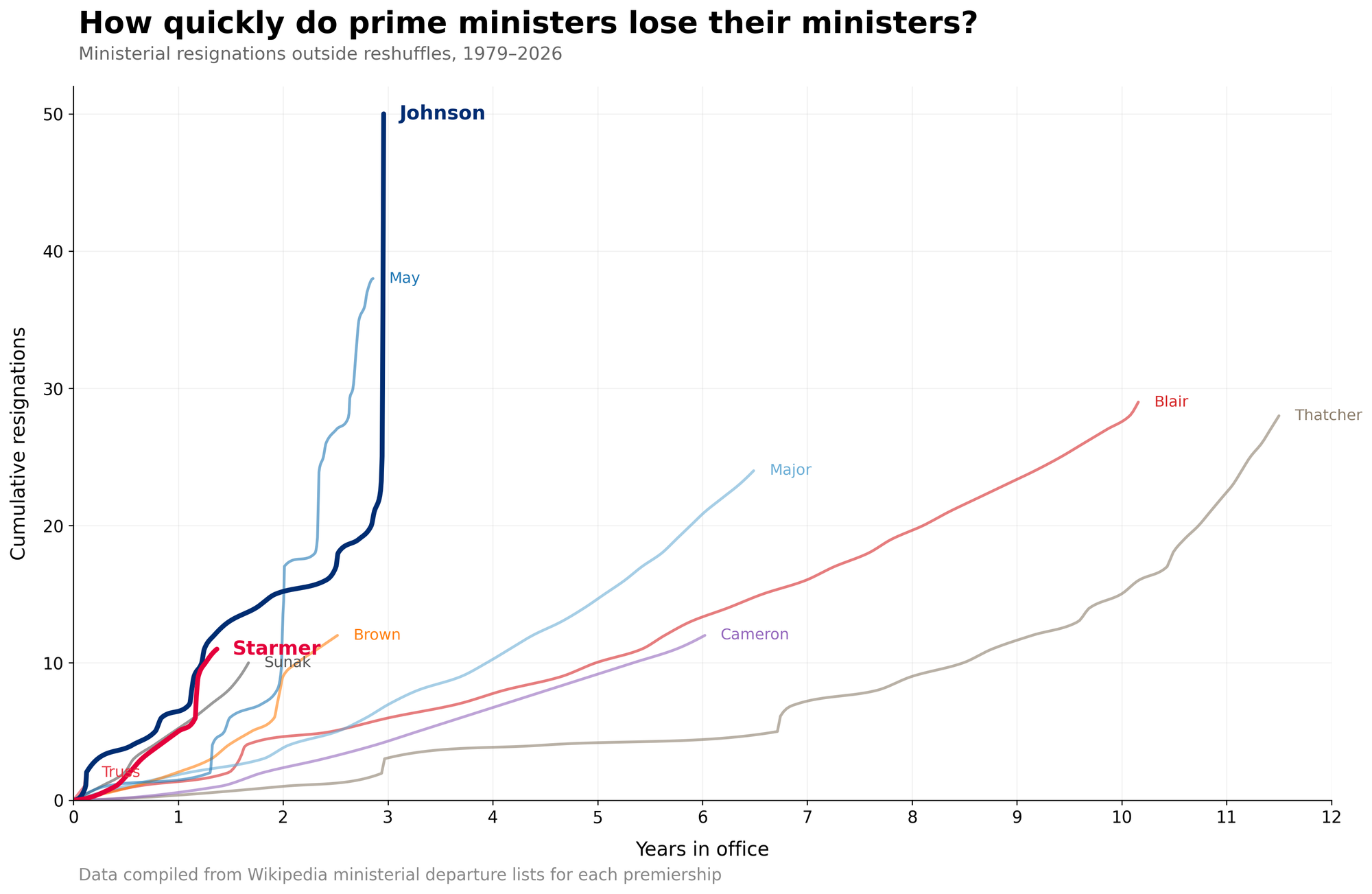
Firstly, the tolerance for political disagreement has fallen dramatically. The new normal is for ministers to resign when they are upset. Starmer is following a bleak pattern.
Good for our TV show, but awful for economic confidence. Labour has a chance to put an end to such jitters, but not if the squabbling becomes a ruck.
PM scalping in recent years has started to affect currency and bond yields. Businesses have delayed decisions based on this chaos. This is unlike previous decades when a PM resigning was merely a handover.
Civil servants are nervous yet another shift in leadership under such short tenure would be extremely damaging to programmes in flight.
The last thing the economy needs is more delays to decision-making, yet further disclosures related to the Epstein story could override that argument entirely.
The second problem is that in the last few days, no one has come up with a serious contender who could drive the economic growth Labour so desperately wants to show. All contenders would appear to back further rises in tax and harsher conditions for business.
Starmer is perhaps not the best PM candidate of all time, but he may be the best business will get this term unless Labour accepts some fresh blood or changes its outlook on growth. He inherited a dire economic position and is trying to make the best of it, albeit not in a business-friendly way.
Until we know more, Starmer's message will be 'better the devil you know'. And perhaps that is right.
Perhaps.

Selling to the C-Suite
On Thursday 26th February at 10am, I'm running a free webinar on selling to the C-suite. It's the course I have given to a number of Fortune tech companies to help them shift the narrative to get better engagement.
Believe it or not, these companies face the same challenges as everyone else: confidence, clarity and charisma in dealing with CEOs. If your team is underperforming, this is a good use of their time - and it's free.
Next week, invitations are going to CEOs of tech companies and B2B firms, but you guys get first dibs as you read the newsletter. There are 20 places - 13 have already gone to you guys. There are seven left.
Most sales approaches are built for procurement and volume. They lead with product, stack up features and follow a process designed for people whose job is to evaluate vendors. But when you're selling to a CEO, CFO or board member, none of that lands.
You have to be the expert problem solver and the trusted advisor.
How do you become that?
Click the link and register.